After a long COVID break from travel, Richard and I finally set sail again, aboard Oceania’s Sirena — a smaller ship with about 750 passengers. Our itinerary promised the drama of a Panama Canal transit followed by the Caribbean and the ABC islands, with Jamaica and Nassau to round things out.
The adventure began before we even reached the ship. Our 6 a.m. flight out of Toronto was canceled after the cockpit failed its pre-flight check. An hour later we were off the plane, scrambling to rebook, while a Delta crash on landing shut everything down for several more hours. With seats scarce after recent snowstorms, we worried about missing the ship entirely. My sister Helen (our travel agent) and Peter (our son-in-law) worked phones and websites, while we anxiously eyed the clock. In the end, we made it to Panama City — but not our luggage.
The bags were marooned in Toronto, then Houston, then “somewhere.” Oceania’s executive concierge took over the chase, while the ship outfitted us with amenity kits and discounts in the boutique. I bought a dress and sunscreen; Richard found a Lacoste cap and underpants.
We managed with what we had until, on Day 6 in Aruba, our luggage finally caught up.
The important thing was we hadn’t missed the main event: the Panama Canal crossing, scheduled for our very first full day at sea. We ordered room service breakfast and watched the early locks from our veranda, then shifted to the spa lounge deck at the bow for a different vantage point. The heat was a shock — 30°C after leaving behind –10°C — but the spectacle of linesmen tossing their ropes and the “mules” guiding us through the old locks was unforgettable. Frigate birds and herons wheeled overhead, as if staging their own welcome.
Colombia was next: Cartagena and Santa Marta. Both were fascinating, historic, and brutally hot. Cartagena’s castle was well worth the climb, though steep in the blazing sun, while the old bullring — now ringed with modern shops — was a curious contrast. Santa Marta offered quaint streets and colonial buildings. The 32°C heat, however, left us rashy and wobbly, and without our over-the-counter remedies (still locked in our missing suitcases), we simply endured.
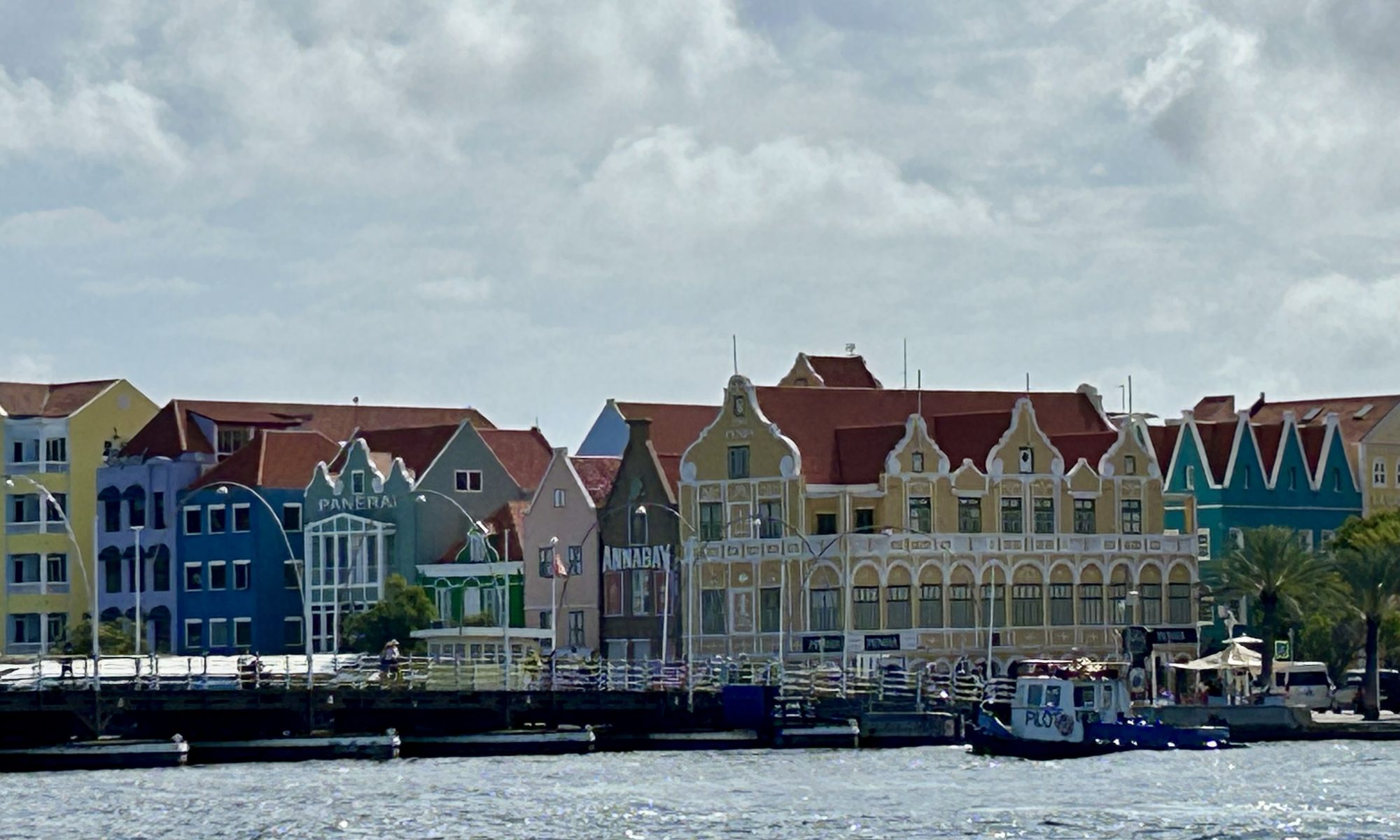
In Aruba, for the first time ever, we stayed aboard. Shocking, I know! But after our rocky start, a quiet day on the balcony, with a view of Oranjestad’s famous pink building, suited us perfectly. Curaçao drew us back ashore for a walking tour, while Bonaire was just a short stroll — we sensibly skipped the rough jeep excursion.
Jamaica offered one of our highlights: Frenchman’s Cove, a shaded beach of great beauty where we lazed for over an hour. Nearby, we peeked at the Blue Lagoon, made famous by the film. Nassau was our final port before disembarkation in Miami, where we sensibly booked a transfer to the airport rather than wrestle with public transport.
In between ports, we enjoyed sea days, the view from our veranda, and the company of fellow passengers. People were unfailingly polite — no anti-Canadian jokes, no political grumbling. One American even quietly apologized to Richard about Trump.
It had been five years since our last cruise, and we did need a little time to get our “sea legs” back. Some things had changed, and some lessons were reinforced. Next time, we’ll travel lighter — or at least pack more essentials in our carry-on. I also think we’ll return to our old habit of booking private excursions: smaller groups, more flexibility, and usually more fun.
And one last takeaway: after 12 days of shipboard indulgence, it’s back home now to deal with the after-effects of all that delicious food!